
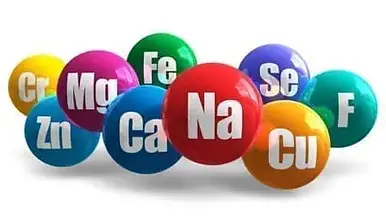
The composition of the water consists of:
75% H2O molecules (65% oxygen & 10% hydrogen)
18% carbon (dissolved in water)
4% dry residue dissolved in water: minerals (ionized salts) & trace elements. Minerals in water (ions = electrically charged particles) are the dry residues remaining in the water after evaporation at 180°C. The dry residues are calculated as a function of the electrical conductivity of the water, expressed in µS cm-1. For example: tap water with a hardness of 37°fa with a conductivity of +/- 647 µScm-1, or 670 x 0.71592 = 463 mg/L dry residue (including 370 mg of lime); the WHO recommends a maximum of 1,000 mg/L dry residue.
Inorganic minerals (their presence in water varies depending on the geographical areas where it is extracted!): Calcium, magnesium, sodium, potassium, phosphorus, bicarbonates; measured in mg/L
Between 5% and 25% of them can be absorbed by the body (they are eliminated through the kidneys-urine) and this is all the more easily because they are restructured in colloidal form and ionized by the Biodynamizer®
80% of these minerals consist of lime or tartar = CaCO3 (Calcium carbonate) + MgCO3 (Magnesium carbonate) which is measured by the hardness of the water, expressed in TH (French degrees); 1 ° f hardness = 10 mg/l CaCO3
Trace elements: natural synergy of fluorine, selenium, silicon, iron, copper, zinc, cobalt, bromine, manganese, iodine, chromium, molybdenum, etc.; measured in µg/L and fully absorbable
3% nitrogen
Importance of minerals in drinking water:
Hard water provides the amount of calcium and magnesium the body needs to promote bone formation, maintain proper muscle and nervous system function, and prevent the risk of cardiovascular disease and osteoporosis. It also contributes to the body's defenses. "The mineral elements present in tap water, by contributing to the daily mineral intake necessary for the body's proper functioning, play a clear beneficial role in health. Calcium in water can also play a role in protecting against cardiovascular disease. Calcium's role in the elimination of fats and the regulation of blood cholesterol is also recognized" (source: French Ministry of Health, 2006).
Natural water contains mineral salts, primarily calcium and magnesium (approximately 80%). These minerals are bioavailable and therefore easily absorbed by the body (intestinal absorption), just like mineral-containing foods. Studies on this topic estimate this absorption rate at around +/- 25%! The minerals in natural water therefore account for between 20% and 50%* of the recommended dietary intake (RI) of calcium and magnesium for an individual (for an adult male/female: calcium requirement +/- 900 mg/day, magnesium requirement +/- 400 mg/day)! (* depending on the mineral content of the water and the age of the individuals involved). Calcium and magnesium are therefore beneficial for health. Calcium contributes to bone health and plays a beneficial role in hypertension, cardiovascular disease, and colon cancer. Magnesium is involved in the activation of more than 300 enzymatic systems, fights fatigue, diabetes and coronary heart failure, as well as osteoporosis… Knowing that the average population has an average calcium deficiency of +/- 40% (average nutritional needs) and even 70% for magnesium, it appears essential for us to drink water with a mineral content of around +/- 400 to 500 mg/L! Source: Study on the absorption of calcium and magnesium in natural mineral water, Patrice Fardellone, CHU Amiens, Université Picardie Jules-Verne, 2015
The WHO (World Health Organization) speaks of an “optimum below 1,000 mg/liter.
In its decrees of 1990 and 1995 concerning the quality of water intended for human consumption, the French High Council of Public Hygiene sets the quantity of dry residues, after drying at 180 ° C, at a maximum of 1,500 mg/litre.
It is also important to have calcium-magnesium (components of lime) in the water because of the rounder and softer taste of water with mineral salts.
.png)